

Virtual reality (VR) has come a long way in recent years. No longer confined to expensive, clunky hardware that requires a powerful PC, VR is now accessible, immersive, and — for many — wireless and standalone. Whether you’re a gamer seeking full immersion, a casual user curious about VR experiences, or someone who wants the richest mixed reality tech, 2025’s headset lineup offers compelling options across budgets and use cases.
In this guide, we’ll explore the best VR headsets available now, what sets each apart, who they’re best for, and why you might want to consider them.
🎮 Meta Quest 3 — Best Overall VR Headset

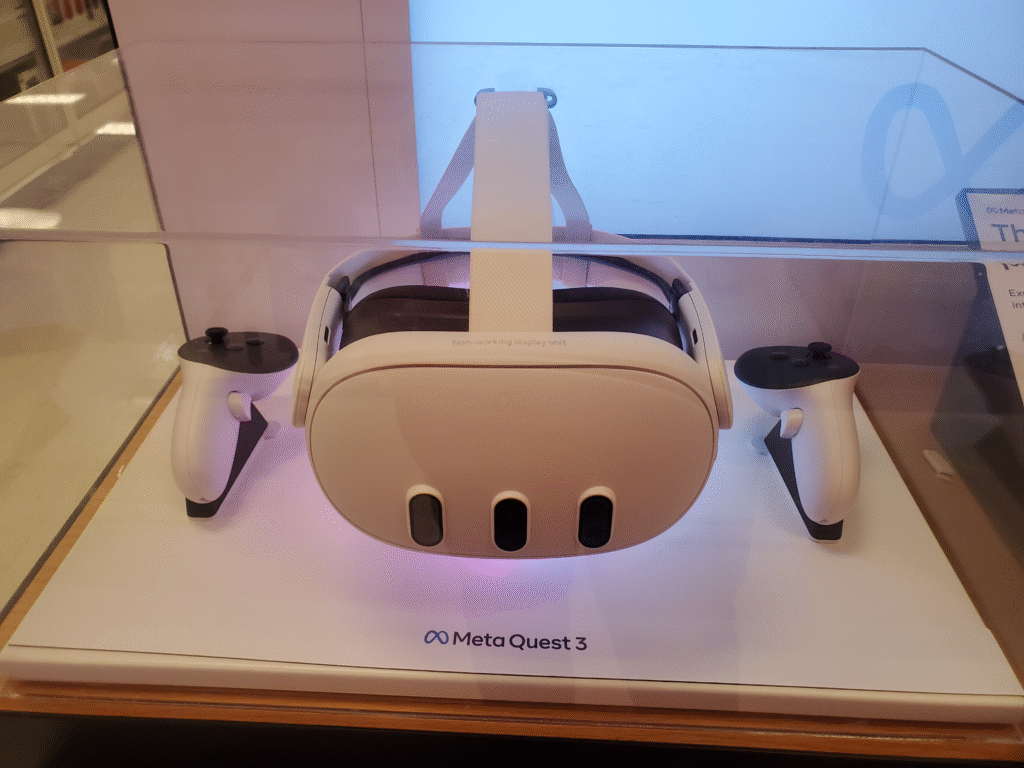
By most measures, the Meta Quest 3 currently tops the VR headset charts for 2025, offering an impressive balance of price, performance, comfort, and versatility — making it a standout choice for most users.
Check out our Meta Quest 3 Review for more detailed information.
🧠 Why It’s Great
- Standalone & wireless — no PC or console required
- Sharp resolution (~2064 × 2208 per eye) and high refresh rates
- Mixed reality passthrough with color cameras
- Wireless PC VR support (via Air Link or cable for PC titles)
- Large game and app library via Meta Quest Store
- Comfortable ergonomics for extended sessions
The Quest 3 uses Qualcomm’s Snapdragon XR2 Gen 2 chipset, giving it a noticeable performance boost over earlier models — including smoother visuals, more detailed textures, and better tracking. Reviewers frequently call it the best all-around VR headset of 2025, combining standalone convenience with serious gaming capabilities.
✅ Best For
- New VR users who want a complete, no PC needed experience
- Gamers who want mobility and access to PC VR content
- Casual to enthusiastic players seeking versatile VR
⚠️ Considerations
- Battery life remains around 2–3 hours per session
- Mixed reality features are strong but still growing in content support
💰 Meta Quest 3S — Best Value VR Headset

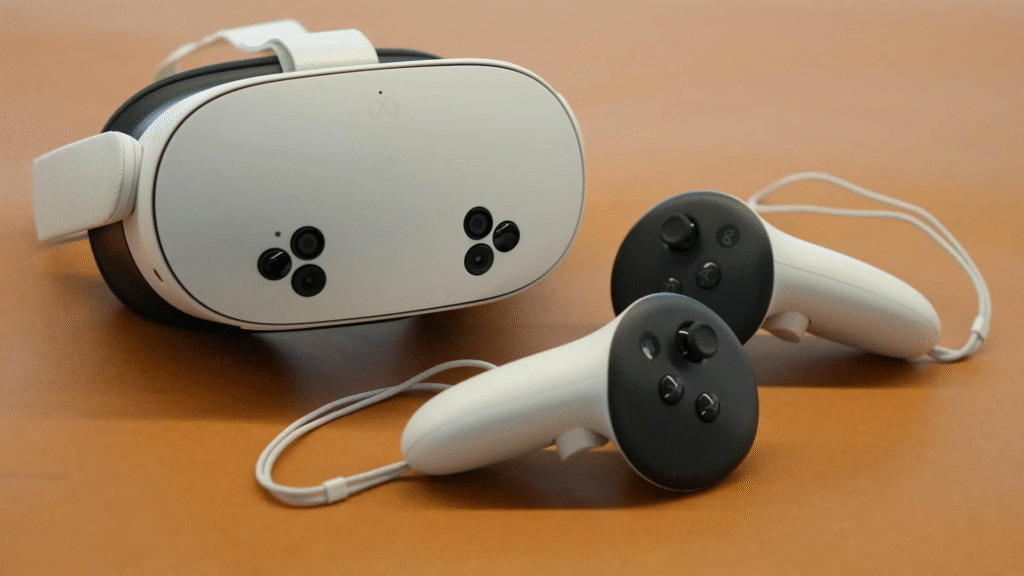
If the Quest 3 is an ideal VR experience but a bit pricey, the Meta Quest 3S stands out as an excellent budget-friendly alternative. It keeps many of the Quest 3’s key advantages while trimming some hardware elements to lower the price.
🧐 Key Differences from the Quest 3
- Same Snapdragon XR2 Gen 2 processor
- Slightly lower resolution displays (~1832 × 1920 per eye)
- Fresnel lenses instead of higher-end pancake optics
- Mixed reality support retained
- Better battery life in some configurations
Because it shares the same powerful processing core and a large game library, the Quest 3S represents a best-value VR headset — particularly for those new to VR or budget-conscious buyers. It delivers a solid experience without breaking the bank.
✅ Best For
- First-time VR buyers
- Students, casual gamers, and families
- Users who want access to a big game library at lower cost
⚠️ Considerations
- Visual clarity isn’t quite as sharp as the flagship Quest 3
- Fresnel optics may show slight artifacting compared to premium lenses
🎮 PlayStation VR2 — Best VR for Console Gamers

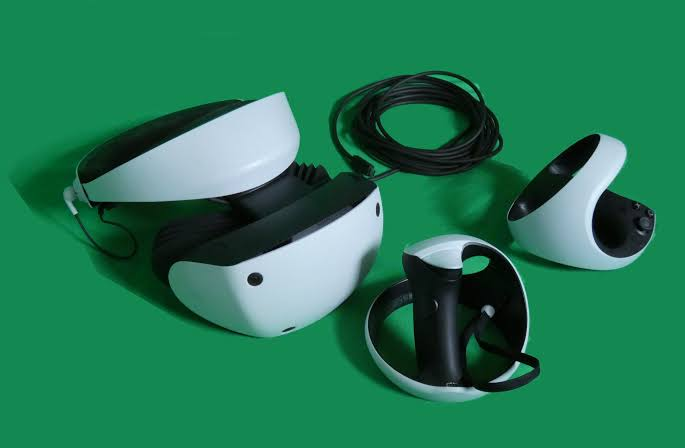
If you own a PlayStation 5, the PS VR2 remains one of the most compelling VR headsets you can buy in 2025. Designed especially for Sony’s console ecosystem, this headset combines strong hardware with immersive features and console-exclusive titles.
🧠 What Makes It Special
- OLED displays with high resolution (~2000 × 2040 per eye)
- Haptic feedback and adaptive triggers via Sense controllers
- Eye-tracking and headset vibration to deepen immersion
- Strong lineup of exclusive titles and Sony backing
- Optional SteamVR compatibility with PC (adapter required)
The PS VR2 leans more toward premium tethered VR — connecting to a powerful console — but delivers excellent immersion through fine visuals and precise controls.
✅ Best For
- PS5 owners and console players new to VR
- Fans of narrative and exclusive VR titles
- Players who want high-quality visuals without a PC
⚠️ Considerations
- Requires a PS5 to run
- Not fully standalone like Quest models
🧠 HTC Vive XR Elite — Mixed Reality & Premium Standalone

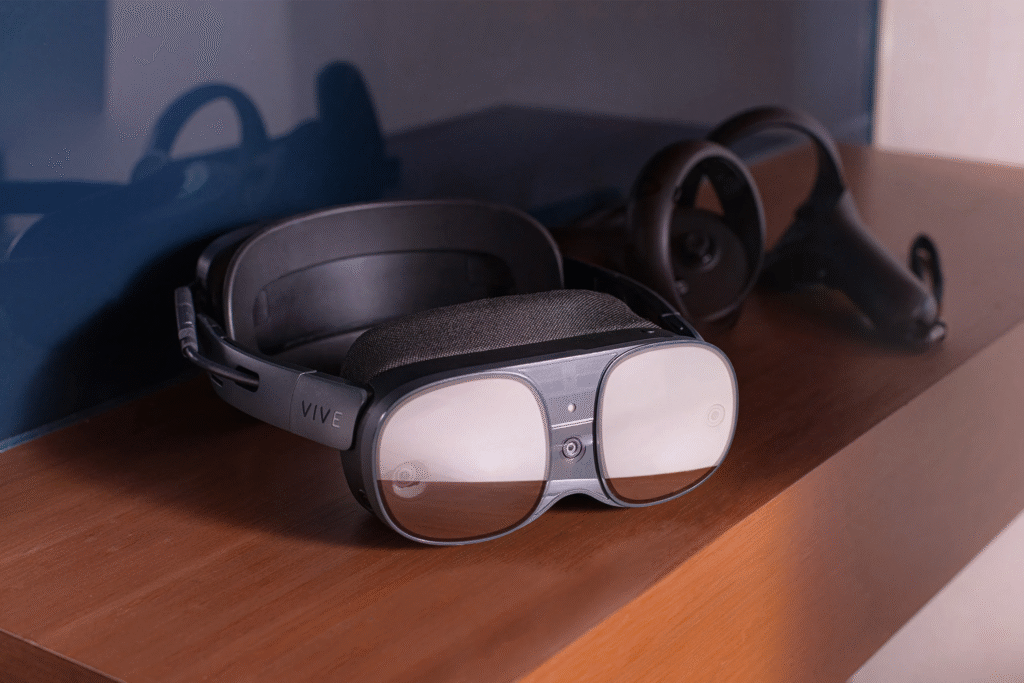
The HTC Vive XR Elite is a solid standalone option that blends VR and mixed reality features, helping it appeal to both gaming enthusiasts and productivity users alike.
🔧 Standout Features
- Mixed reality support with solid inside-out tracking
- 4K resolution and good field of view
- Standalone operation with no external PC required
- Sleek design and modular components for extended sessions
This headset doesn’t necessarily beat the Quest 3 for games, but it does excel at providing a balanced MR/VR experience that feels comfortable and capable without needing external hardware.
✅ Best For
- Users who want reality blending + VR in one headset
- Those who prefer premium ergonomics for long play sessions
⚠️ Considerations
- Smaller app ecosystem compared to Meta’s store
🧪 Pico 4 Ultra & Other Standalone Competitors
While the Meta Quest line dominates the standalone market in many regions, devices like the Pico 4 Ultra also offer notable alternatives — especially in parts of the world where Pico hardware is available. These headsets focus on ergonomics, display quality, and comfort, often with slimmer profiles and high resolution for extended use.
Though Pico headsets may be limited by regional availability or app ecosystem differences compared to Meta Quest, they still represent reliable VR hardware, particularly for users prioritizing comfort and visuals over brand ecosystem.
🔹 Other PC VR Headsets
Brands like HP and Samsung also produce PC-tethered headsets focused on either resolution (HP Reverb series) or mixed reality integration (Samsung Galaxy XR). The latter is a premium mixed reality platform blending VR, AR, and productivity with high-end specs.
✅ Best For
- PC VR enthusiasts
- Simulation and professional VR experiences
- Users seeking the most immersive visuals available
⚠️ Considerations
- Must be connected to a powerful PC
- Higher cost due to additional hardware needs
🏁 How to Choose the Right VR Headset
Choosing the right headset depends on how you plan to use it. Answer these questions to narrow your choice:
🎮 Are you a casual or first-time user?
Lean toward standalone headsets like the Meta Quest 3 or Quest 3S — no PC, no console required.
🕹️ Do you have a PS5?
The PlayStation VR2 provides high-quality visuals and immersion with console exclusives worth exploring.
🧠 Are you into mixed reality or professional use?
Headsets like the HTC Vive XR Elite or Galaxy XR offer a balance of VR and real-world integration.
🖥️ Are you a hardcore PC VR gamer?
Valve Index variants, Pimax Crystal, or other high-end tethered devices deliver unmatched immersion when paired with a strong PC.
📌 Final Thoughts
2025’s VR landscape is rich and varied. From accessible standalone systems like the Quest 3 and 3S to console gems like the PS VR2 and professional-grade mixed reality on HTC and Samsung platforms, there’s a headset for every type of user.
When choosing your next VR device:
- Think about your budget
- Understand where you’ll use it
- Decide whether you want standalone convenience or tethered performance
Once you match a headset to your use case, you’ll be steps closer to enjoying immersive gaming, social VR, cinematic experiences, and mixed reality in 2025 and beyond.